Start with TanStack Start_
Build TanStack Start apps with the Appwrite React library. Add server-rendered authentication via file-route handlers and server functions.
2 min read
Quick start agent prompt
Use this pre-built prompt with Cursor, Claude, or another coding agent to set up Appwrite for this guide. Copy it, preview it below, or open it directly in a supported tool.
Learn how to set up your first TanStack Start project with the Appwrite React library. The library exposes a TanStack file-route handler, server helpers, and the same React hooks you use on the client.
1. Create project
Head to the Appwrite Console.
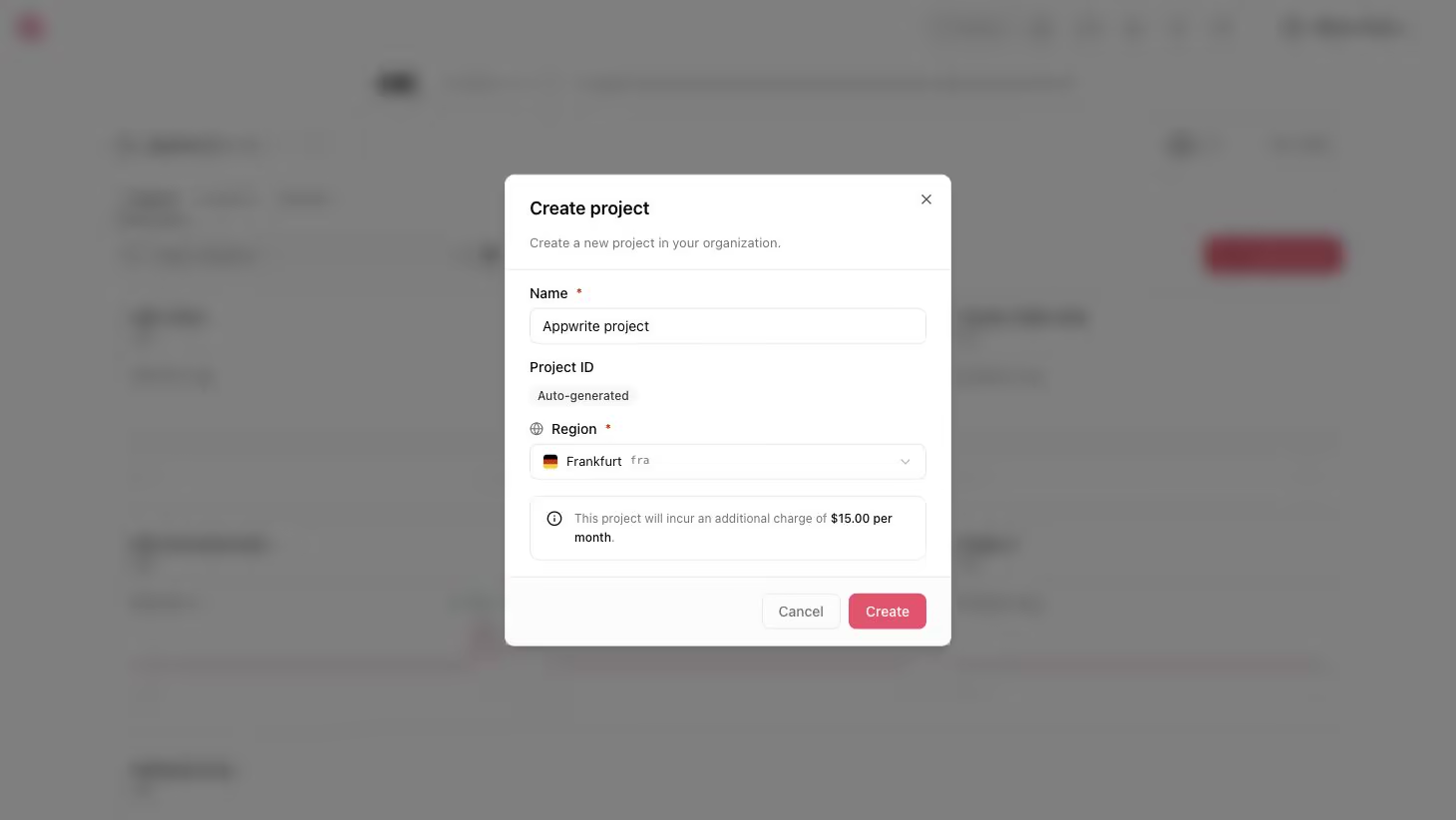
If this is your first time using Appwrite, create an account and create your first project.
Then, under Add a platform, add a Web app. The Hostname should be localhost.
Adding localhost as a platform lets your local app talk to Appwrite. For production, add your live domain to avoid CORS errors.
Learn more in our CORS error guide.
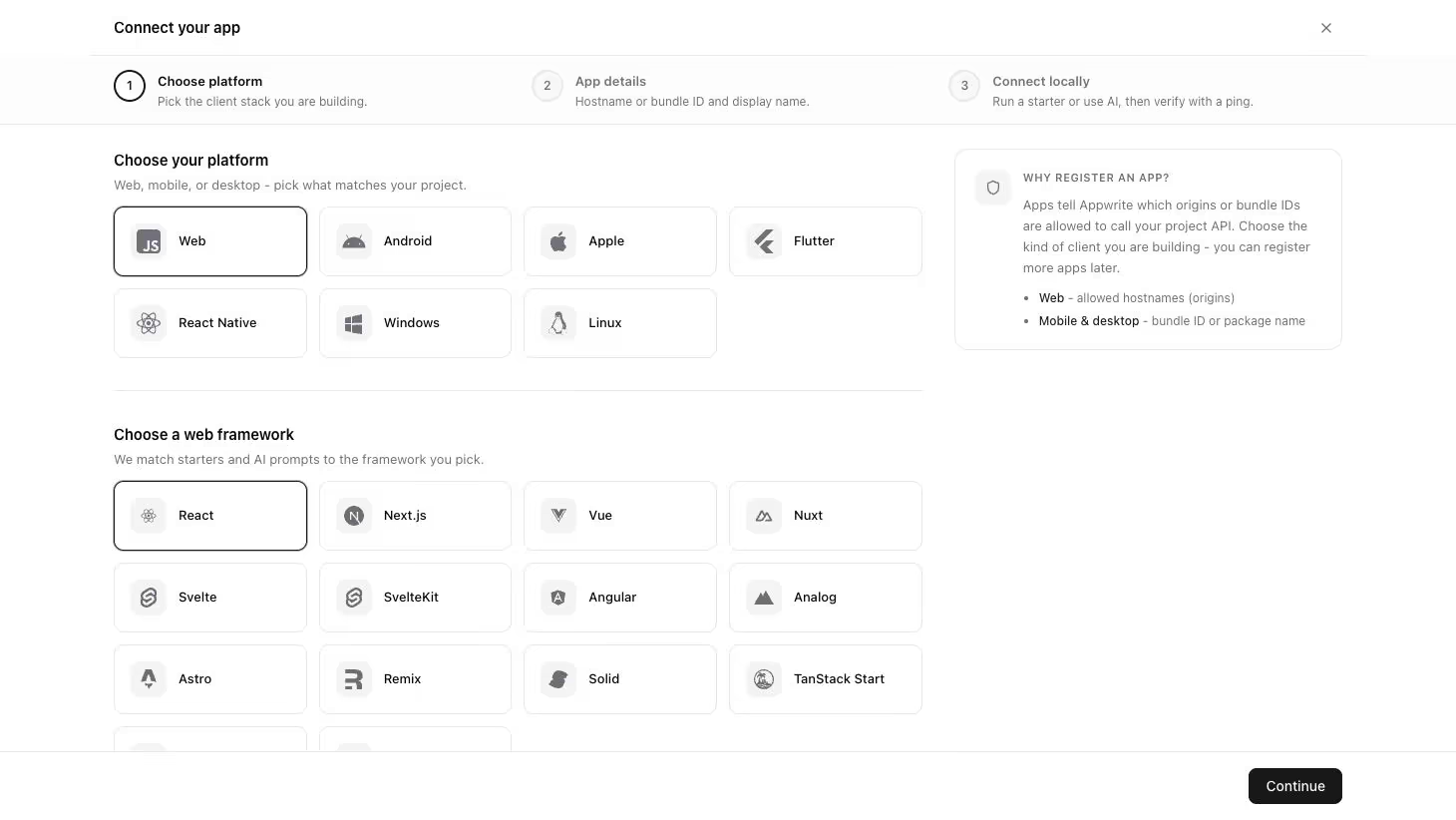
You can skip optional steps.
2. Create an API key
In your project, go to Overview > Integrations > API keys and create a new key with the scopes users.read, users.write, and sessions.write. Copy the key secret. The SSR handler uses this to create sessions on behalf of users; never expose it to the browser.
3. Create TanStack Start project
Create a TanStack Start project.
npx @tanstack/cli create my-app --framework react && cd my-app4. Install the React library
Install the React library along with the Appwrite Web SDK, Appwrite Node SDK, and @tanstack/react-query packages.
npm install @appwrite.io/react appwrite node-appwrite @tanstack/react-query5. Configure environment variables
Create a .env file at the project root. Replace <REGION>, <PROJECT_ID>, and <API_KEY> with your own values.
VITE_APPWRITE_ENDPOINT=https://<REGION>.cloud.appwrite.io/v1VITE_APPWRITE_PROJECT_ID=<PROJECT_ID>APPWRITE_API_KEY=<API_KEY>VITE_* values are shipped to the browser. APPWRITE_API_KEY stays server-only.
6. Mount the auth handler route
Create src/routes/api/appwrite/$.ts. The TanStack file route exposes the library's sign-in, sign-up, sign-out, and oauth/callback endpoints under /api/appwrite/*.
import { createFileRoute } from "@tanstack/react-router";import { createAppwriteHandlers } from "@appwrite.io/react/handlers/tanstack";
export const Route = createFileRoute("/api/appwrite/$")({  server: {    handlers: createAppwriteHandlers({      endpoint: import.meta.env.VITE_APPWRITE_ENDPOINT,      projectId: import.meta.env.VITE_APPWRITE_PROJECT_ID,      apiKey: process.env.APPWRITE_API_KEY!,      basePath: "/api/appwrite",    }),  },});
7. Read auth state in a server function
Replace src/routes/index.tsx with the following. A createServerFn loader reads the session cookie server-side; the page receives the result via Route.useLoaderData() and passes it into AppwriteProvider.
import { useState } from "react";import { createFileRoute, useRouter } from "@tanstack/react-router";import { createServerFn } from "@tanstack/react-start";import { AppwriteProvider, useAuth } from "@appwrite.io/react";import { createTanStackServerHelpers } from "@appwrite.io/react/server/tanstack";
const getAuthSnapshot = createServerFn({ method: "GET" }).handler(async () => {  const helpers = createTanStackServerHelpers({    endpoint: import.meta.env.VITE_APPWRITE_ENDPOINT,    projectId: import.meta.env.VITE_APPWRITE_PROJECT_ID,  });  return {    session: helpers.readSessionCookie() ?? null,    user: await helpers.getLoggedInUser(),  };});
export const Route = createFileRoute("/")({  loader: () => getAuthSnapshot(),  component: Page,});
function Page() {  const { session, user } = Route.useLoaderData();
  return (    <AppwriteProvider      endpoint={import.meta.env.VITE_APPWRITE_ENDPOINT}      projectId={import.meta.env.VITE_APPWRITE_PROJECT_ID}      ssr={{ session, basePath: "/api/appwrite" }}    >      <main>        <h1>Appwrite React library on TanStack Start</h1>        <p>SSR user: {user?.email ?? "signed out"}</p>        <AuthPanel />      </main>    </AppwriteProvider>  );}
function AuthPanel() {  const { user, isLoading, signIn, signUp, signOut, error } = useAuth();  const router = useRouter();  const [email, setEmail] = useState("");  const [password, setPassword] = useState("");  const [name, setName] = useState("");
  if (isLoading) return <p>Loading...</p>;
  if (user) {    return (      <div>        <p>Welcome, {user.name || user.email}</p>        <button onClick={() => signOut.signOut({ onSuccess: () => router.invalidate() })}>          Sign out        </button>      </div>    );  }
  return (    <div>      <input placeholder="Name" value={name} onChange={(e) => setName(e.target.value)} />      <input placeholder="Email" value={email} onChange={(e) => setEmail(e.target.value)} />      <input        placeholder="Password"        type="password"        value={password}        onChange={(e) => setPassword(e.target.value)}      />      <button        onClick={() =>          signUp.emailPassword({            email,            password,            name,            onSuccess: () => router.invalidate(),          })        }        disabled={signUp.isPending}      >        Sign up      </button>      <button        onClick={() =>          signIn.emailPassword({            email,            password,            onSuccess: () => router.invalidate(),          })        }        disabled={signIn.isPending}      >        Sign in      </button>      {error && <p style={{ color: "red" }}>{error.message}</p>}    </div>  );}
After every auth mutation, router.invalidate() re-runs the loader so the SSR user reflects the new session cookie.
In a multi-route TanStack Start app, move AppwriteProvider (and the auth loader) into src/routes/__root.tsx so the TanStack Query cache and auth state persist across navigations. Mounting the provider in a single route works for this quickstart, but resets the cache every time the route changes.
8. Run your app
npm run devOpen localhost on port 3000. Sign up, sign out, and sign back in to verify the cookie-based SSR flow.
Next steps
For server-side admin operations, per-request session clients, OAuth callbacks, and the full hook reference, see the React library docs.
Was this page helpful?
Share what worked or what we should fix. Once approved, our agents automatically apply suggested updates to the docs.